

Christoph Hinske

I left LinkedIn to escape the noise.

We all shouted louder, and in the end, nobody listened. You wanted to find me, you did. That is enough.
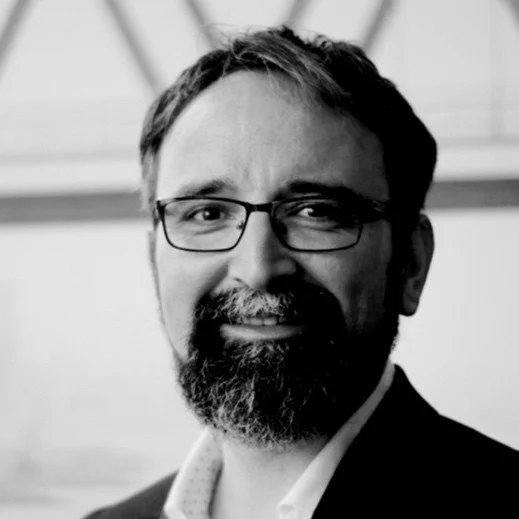
Quick facts

  • Location: Deventer, Netherlands

  • Current: Doctoral Researcher (LUT University)

  • Also: Researcher Ecosystem-Wide Flourishing (Saxion)

  • Email: christoph.hinske@icloud.com

Featured entry points

Start here: PhD Notes
Working concepts, methods, and learnings.

Factor X Series
Edited volume work and contributor coordination.

Agreement Health Check
Short survey signal used as a starting point.

Method paper (in press)
Rigor and method logic in one place.

Agreement Footprint Canvas (in press)
Turn observations into comparable variables.

tbd.

Current roles

  • Core question: What does it mean to be better off in business ecosystems, and how can we tell in decision terms?

    Focus

    • Agreement structures behind coordination quality, cost, and risk in SME ecosystems

    • Turning field evidence into decision-grade models

    Work pattern

    • Qualitative fieldwork and agreement mapping

    • System dynamics modeling and testable hypotheses

    Boundary

    • Independent academic research

    • No advisory services

  • Applied research and tool development at the intersection of ecosystems, agreements, and measurable coordination capacity.

    Focus

    • Making coordination reality discussable and measurable

    • Translating practice into comparable evidence

    Outputs

    • Research instruments and teaching-ready tools

    • Comparative case insights across SMEs

    Boundary

    • Research-first, not consulting-first

    • Non-attributable examples only

  • Co-developing and applying systemic approaches for circular economy implementation with SMEs and regional partners.

    Focus

    • Implementation realism in SMEs

    • Cross-actor coordination in regional transition work

    Outputs

    • Field-tested maturity logic and learning loops

    • Practical decision support formats

    Boundary

    • Focus on adoption and evidence, not slogans

  • Editorial and coordination role in an international series on resource systems and transition capabilities.

    Focus

    • Building coherent contributions across authors

    • Translating research into usable structure

    Outputs

    • Edited volumes, author guidance, editorial process design

    Boundary

    • Quality, rigor, and clarity over volume

Experience (selected)

  • Hands-on work on strategy, facilitation, and tool building across sectors.

    What I did

    • Worked with leadership teams on ecosystem strategy

    • Built data driven tools that support implementation decisions

    • Bridged corporate, civil, and academic worlds

    What that gave me

    • A bias for practical evidence

    • A feel for cross-sector coordination realities

  • Designed and built an integrated learning and research environment.

    Focus

    • Build an operational learning environment, not a program

    • Make outcomes visible and comparable

    Outputs

    • Structure, formats, partner routines

    Senior Lecturer (Hoofddocent), Saxion (Aug 2018 to Feb 2023)

    Teaching and applied research at the intersection of business strategy and systems thinking.

    Focus

    • Curriculum, supervision, applied research

    • Connecting education to partner ecosystems

  • Teaching and applied research at the intersection of business strategy and systems thinking.

    Focus

    • Courses on Leadership and Systems Thinking

    • Connecting education to partner ecosystems

  • Led leadership learning programs and capacity building in international contexts.

    Focus

    • Leadership learning across cultures

    • Capacity building for cross-sector leaders

    • Hinske. C., Ritchie-Dunham, J., Lehmann, H. (Eds.) (forthcoming), Resource use for Human Flourishing (FactorX 6th ed.). Taylor & Francis

    • Hinske, C., & Olde Bijvank-Brekveld, P. (in press). Ecosystem-wide flourishing in practice: Applying the Global Flourishing Goals to transform business and education. In M. Pirson, A. Yemiscigil Jensen, & M. T. Lee (Eds.), Transforming business and education for flourishing. Routledge.

    • Lehmann, H., Hinske, C., de Margerie, V., & Nikolova, A. S. (Eds.). (2023). The impossibilities of the circular economy: Separating aspirations from reality. Routledge. https://doi.org/10.4324/9781003244196

    • Gonser, M., & Hinske, C. (2023). Circular economy, sustainability, and functional differentiation: An impossibility and its strategic-methodological implications. In H. Lehmann, C. Hinske, V. de Margerie, & A. S. Nikolova (Eds.), The impossibilities of the circular economy: Separating aspirations from reality (pp. 61–71). Routledge. https://doi.org/10.4324/9781003244196-8

    • Metcalf, M., & Hinske, C. (2023). Circular economy leadership: Leadership mindsets and behaviours – the unseen impossibility. In H. Lehmann, C. Hinske, V. de Margerie, & A. S. Nikolova (Eds.), The impossibilities of the circular economy: Separating aspirations from reality (pp. 103–113). Routledge. https://doi.org/10.4324/9781003244196-12

    • Mustafa, M. A., & Hinske, C. (2022). Financing WEF nexus projects: Perspectives from interdisciplinary and multidimensional research challenges. In T. Mabhaudhi, A. Senzanje, A. Modi, G. Jewitt, & F. Massawe (Eds.), Water-energy-food nexus narratives and resource securities (pp. 223–234). Elsevier. https://doi.org/10.1016/B978-0-323-91223-5.00001-0

    • Anuwa-Amarh, E., Hinske, C., Bamfo-Debrah, N. K., Sefa, D., Amarh, S., & Nassam, S. (2020). The Kwawu resilient entrepreneurial ecosystems: A complex adaptive systems approach to achieving the Sustainable Development Goals. In H. Lehmann (Ed.), Sustainable development and resource productivity: The nexus approaches (pp. 317–328). Routledge.

Education, Certificates, Affiliations

    • Academie voor Haptonomie (2020 to 2021)

    • Institute for Strategic Clarity, MPhil Ecosynnomics (2014 to 2017)

    • FH Eberswalde, MSc Global Change Management (2006 to 2009)

    • FH Eberswalde, BSc International Forest Ecosystem Management (2002 to 2005)

    • Certified Consultant in Transforming Organisations (ILI)

    • Innovative Leadership Facilitator (ILI)

    • Project Management and Social Entrepreneurship (InWEnt/ASA)

    • Theory U - Change Management Method (MIT)

    • European School of Governance (Germany)

    • Innovative Leadership Institute (USA)

    • Eberswalde University for Sustainable Development (Germany)

    • Circular Business Model Lab (Netherlands)

    • ASEAN Green Chamber of Commerce